Baptist History and Heritage
Trace Baptist life from its English and American roots to Colorado's 1864 first congregation and the Grand Junction church organized in 1883.

Baptist life has a paper trail unlike almost any other Christian tradition: congregations keep minutes, associations keep registers, mission boards keep correspondence, and local newspapers recorded who organized what and when. This section of the journal gathers that trail in one place, from the movement's seventeenth century beginnings to the congregations that took root on Colorado's Western Slope in the 1880s.
Where the Baptist tradition began
The first congregations to call themselves Baptists formed among English separatists in the early seventeenth century. John Smyth gathered an exiled congregation in Amsterdam in 1609 and baptized himself and his members by pouring, an act that broke with both the Church of England and the Puritan mainstream. Within a generation, English Baptists had divided into General and Particular streams over the question of atonement, and both streams practiced baptism upon a personal profession of faith. In North America, Roger Williams founded the first Baptist church in Providence, Rhode Island in 1638, a congregation born from his conviction that civil authorities had no standing in religious matters. That pairing of believer's baptism and religious liberty traveled with the tradition everywhere it went, including the mining camps and valley towns of the American West. The Rhode Island experiment proved durable: by the time of the American Revolution, Baptists were numerous enough that their support mattered in the campaign to write religious freedom into law, and the letter exchange between a Baptist association in Danbury, Connecticut and Thomas Jefferson in 1802 fixed the phrase "wall of separation" into American political vocabulary. Baptists had moved from a persecuted fringe to a visible part of the republic's religious landscape, and the nineteenth century carried them westward with every wave of migration.
What holds Baptists together and what divides them
Baptists share a set of convictions rather than a single hierarchy. Local congregations govern themselves, ordain their own officers and call their own pastors. Membership follows a personal profession of faith and baptism by immersion. Scripture is treated as the final authority in matters of faith and practice, and each believer is considered competent to read it, a principle usually called soul liberty or the priesthood of all believers. Because no bishop binds congregations together, cooperation happens through voluntary associations and conventions, which is why the tradition has produced so many distinct families: American Baptist Churches USA, the Southern Baptist Convention, the Cooperative Baptist Fellowship, National Baptists and a large landscape of independent congregations. Two churches sharing the word Baptist on their signs can differ sharply on worship style, the role of women in ministry or their reading of scripture, a point developed in the journal's guide to Baptist beliefs explained.
How Baptists reached Colorado
The tradition arrived in Colorado Territory during the Civil War years, carried by home mission societies that subsidized pastors in settlements too small to pay them. The first congregation in the territory organized in Denver in May 1864, and the pattern that took shape there, a missionary pastor, a handful of gathered families, a borrowed hall, then a building campaign, repeated in town after town as railroads opened the mountains and the western valleys. The full sequence is traced in the journal's article on Baptist churches in Colorado since 1864. On the Western Slope, the Ute removal of 1881 and the platting of Grand Junction in 1882 opened the Grand Valley to settlement, and Baptists organized there within months, in February 1883.
Why congregational records matter to historians
Because each Baptist congregation is self-governing, no central archive holds the whole story. Church minute books, membership rolls and deacons' registers often survive in local libraries, county historical societies or denominational archives, and they document populations that civil registries missed: births of congregations that predate county record keeping, marriages performed before the courthouse kept systematic files, community leaders whose public paper trail is thin. For genealogists and local historians, a congregation's anniversary booklet, usually compiled at twenty five, fifty or one hundred years, is often the single best summary of its early decades. The journal's article on Christianity in Grand Junction since 1882 shows how denominational records, city directories and local press coverage fit together in one town.
How to research a congregation yourself
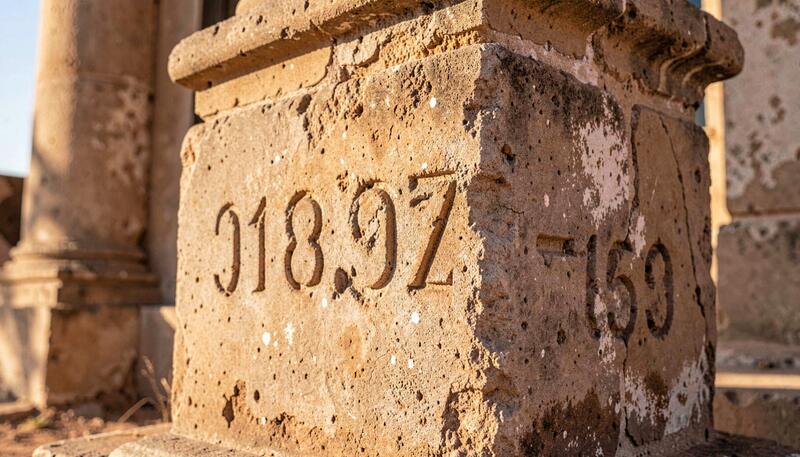
The method this journal uses works for any congregation and needs no special credentials. Start with the obvious secondary sources: county and local histories, anniversary booklets, denominational directories. Move to the local library's history room, in Mesa County the Carnegie Library for Local History, which holds church files, photographs and clippings. Then read the newspapers of the founding period, most of them now searchable, since organizational meetings, cornerstones and dedications were reliably reported. Finally, check the built record: cornerstones often carry dates, and buildings listed on historic registers come with nomination files that summarize a congregation's history with citations. Corrections and additions from readers who know a congregation's records firsthand are welcome through the contact page.
Where to start in this section
Readers new to the subject can begin with Baptist beliefs explained, which sets out the convictions behind the history. The statewide story is Baptist churches in Colorado since 1864, and the local story is the history of First Baptist Church, Grand Junction, organized in February 1883 within months of the townsite itself. For the wider religious landscape of the same town, read the history of Christianity in Grand Junction. Each article states its sources, and each is written from the outside, in the third person, as journalism rather than testimony.