Bible Study Methods
A practical library of Bible study approaches, from inductive observation to group facilitation, for readers and leaders at any level.
People come to the Bible from wildly different starting points: a lifelong churchgoer who has never read the text straight through, a newcomer curious what the book actually says, a small group leader responsible for next Tuesday night. This section of the journal treats Bible study as a craft with methods, tools and practiced habits, something a reader can get better at, and it lays out the approaches that work for people studying alone or in groups around a table.
The main ways people study the Bible
Most study fits one of five patterns, and each answers a different question. Inductive study works through a passage in three movements, observing what the text says, interpreting what it meant to its first readers, and applying what it asks of a reader now. Book study reads one whole book of the Bible across weeks, keeping its structure and argument in view instead of scattering across chapters. Topical study traces one subject, money or prayer or rest, through the whole library of scripture using a concordance or search tool. Character study follows one figure, noticing how the narratives treat their failures as plainly as their successes. And plain reading plans, a chapter or a set of chapters a day, build the familiarity that every other method assumes. Beginners can find these five patterns set out step by step in the journal's guide to Bible study methods for beginners.
What the reader needs on the desk
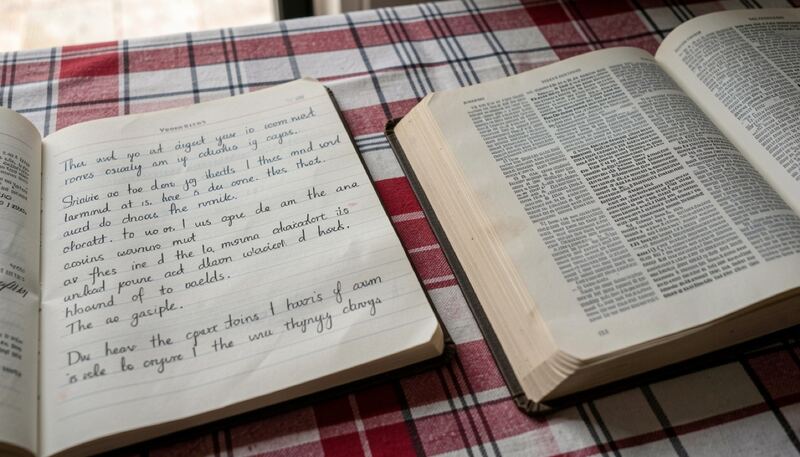
The tool list is short. A translation the reader understands, and ideally a second one for comparison: a more literal rendering such as the English Standard Version or New American Standard Bible beside a more contemporary one such as the New International Version or the Christian Standard Bible, since where two translations differ, something in the original language deserves a second look. A notebook, because writing forces observation and slows the eye down. A concordance or a searchable Bible site for tracing words, of which BibleGateway is the most established free example. Optional but useful: a one volume Bible dictionary for places, people and customs, and a simple atlas, since geography silently organizes much of the narrative. Commentaries are best used after personal study rather than before, otherwise the reader remembers the expert's conclusions instead of noticing the text.
Studying alone: habits that survive real weeks
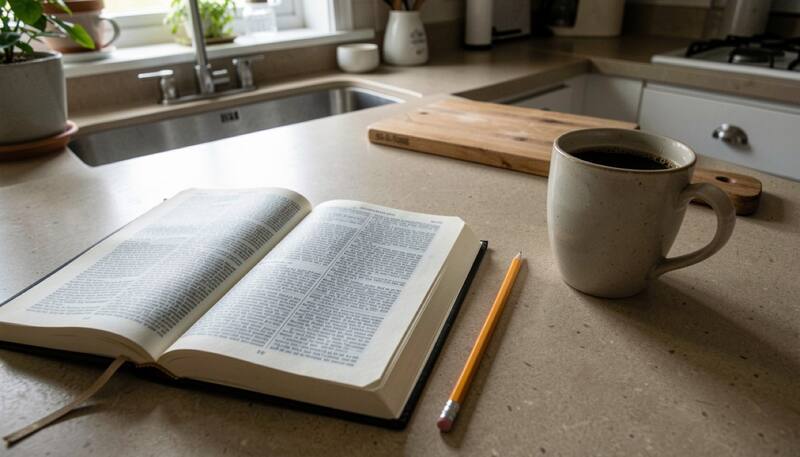
Solo study fails for logistical reasons more often than intellectual ones, so the craft lies in scheduling. A consistent time and place, fifteen minutes at the same kitchen table every morning, outperforms an ambitious hour that happens rarely. Reading with a pencil, marking repeated words, connectors such as therefore and but, and questions in the margin, keeps attention from sliding across the page. Writing one sentence of summary after each session creates a personal record that compounds: after a month the reader owns a running commentary of their own noticing. The journal's beginner guide includes a concrete first week plan built on exactly these habits, and its article on questions that open a passage supplies question sets that work for private study as much as for groups.
Studying in groups: a different craft
Group study adds a facilitation layer on top of the text work. A group that reads aloud together, then works through observation questions before anyone offers interpretation, reliably produces better discussion than one that opens with opinions. The leader's preparation matters most: knowing the passage well enough to steer without lecturing, holding a prepared set of questions, and planning the timing so application gets real minutes before the hour ends. The journal's guide to leading a small group Bible study lays out a ninety minute meeting structure, a preparation routine and the facilitation moves that keep quiet members in and dominant members from filling every silence.
What this section covers next
Three guides form the working core of this section. Bible study methods for beginners starts from zero and gives five methods with steps, timeframes and a first week plan. Bible study questions that actually start discussion teaches the three level question pattern with worked examples and the pitfalls that kill conversation. How to lead a small group Bible study that lasts covers the season by season work of keeping a group alive: recruitment, rhythms, leadership multiplication and the pastoral care that happens between meetings. Together they assume nothing beyond a Bible, a notebook and willingness.
Studying at different life stages
The methods scale with the reader rather than the reverse. Teenagers beginning seriously usually take fastest to character study and reading plans, since narrative momentum carries them past the unfamiliarity. Parents of young children study in fragments, and the fragment sized methods, one passage, three questions, a written line, fit that season better than ambitious projects. Retired readers often bring the time for the slow layering the craft rewards: parallel translations, cross references, a decade of notebooks. Groups mix the stages productively, since the newcomer's basic questions regularly expose what the experienced reader has stopped noticing. None of this is trivia: the habit of reading well, once built, is the same at every age.
A note on reverence and honesty
Studying well is not a substitute for believing or disbelieving; it is the ordinary discipline of paying attention, and it treats the text with more respect than either casual quotation or confident ignorance. Readers who want to understand how the scriptures function in the congregation down the street can pair this section with the journal's guides on Christian education and discipleship and what happens at a Baptist church service, where the studied text becomes a community's shared reading.