Church Life and Community
What happens inside a Baptist service, how congregations run community programs, and how Christian education and discipleship work in practice.
From the street, a church building reads as one thing: a place where something happens on Sunday morning. Inside, the week looks different. There are services and ordinances, yes, but also food pantries staffed on weekdays, youth groups on Wednesday evenings, tutoring tables on Tuesday afternoons, recovery meetings in basement rooms, and a constant quiet administrative hum of committees, volunteers and budgets. This section of the journal documents that whole life in the third person, as an observer would record it: what happens in worship, what congregations do for their towns, and how people are formed inside them.
What this section covers
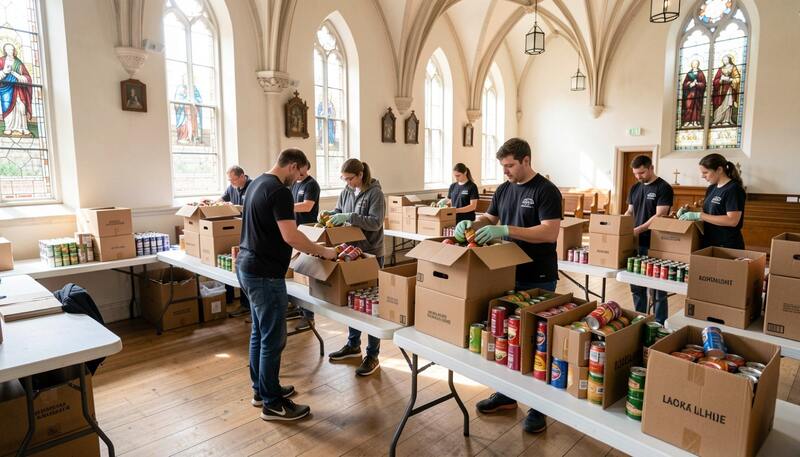
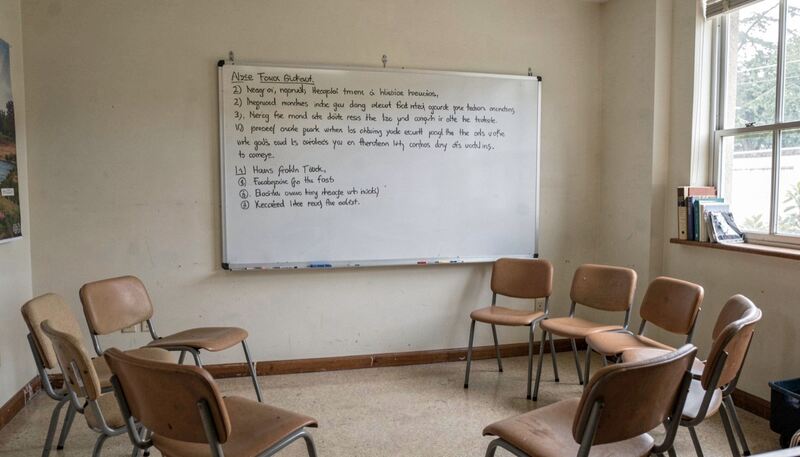
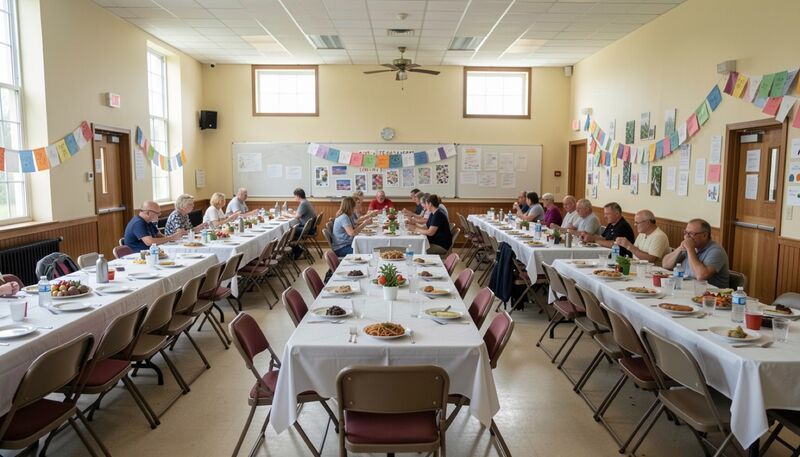
Three guides organize the material. The first walks through a Baptist church service from prelude to benediction, including the two ordinances, baptism and the Lord's Supper, and what a first time visitor can expect. The second surveys church community programs, the food pantries, community meals, after school tutoring, English classes, clothing closets and seasonal drives through which congregations serve people who never join them. The third explains Christian education and discipleship, the Sunday schools, membership classes, mentoring pairs and study groups that turn Sunday attendance into something longer and more deliberate. Together they describe the congregation as an institution with a life of its own.
Why describe church life from the outside
This journal is an editorial publication, not a congregation, and it writes about churches the way a regional reporter writes about any civic institution: with attention, fairness and sources. Describing church life accurately serves several readers at once. The newcomer wondering what will happen if they attend a service deserves a factual account before they walk in. The researcher or journalist needs a plain description of how congregations actually function, from deacon boards to food pantry logistics. And the curious neighbor, believer or not, gets an answer to what goes on in the building on the corner beyond the shorthand of steeples and parking problems. Everything here is written to be verifiable, and corrections from readers who know congregational life firsthand are welcome through the contact page.
The congregation as a volunteer institution
What surprises outsiders most about church operations is how much of the work is unpaid. A mid sized congregation may run a weekly food distribution, a scout troop, a choir, a recovery meeting and a preschool with a paid staff of a handful of people. The mechanism is old and effective: members volunteer from conviction, committees coordinate without hierarchy, and the congregation's business meeting, where members vote budgets and elect officers, functions as a small democracy. Baptist congregations push this furthest, since their polity makes each church self governing, as explained in the journal's guide to Baptist beliefs. The same volunteer machinery explains the characteristic failure modes, burnout in a too small core of doers and programs that outlive their organizers, which the programs guide examines honestly.
Church life as local history
Congregations are also among the longest lived institutions in most American towns, and their records preserve what municipalities often lost. The Grand Junction congregation documented in this journal's founding history organized in February 1883, months after the townsite was platted, and its building campaigns tracked the orchard economy's booms and freezes. Across the country, church minute books, membership rolls and anniversary booklets are standard sources for genealogists and local historians precisely because congregations kept records continuously while businesses failed and families moved. The wider story of how churches shaped Grand Junction's civic life, from meeting halls to social calendars, is told in the history of Christianity in Grand Junction.
What this section deliberately leaves out
A word on method, since church life writing easily slides into either promotion or expose. This journal does not publish worship resources, devotional reflections or sermons, and it does not evaluate doctrine: where congregations disagree, the disagreement is reported, not adjudicated. It does not rank churches, publish attendance or budget figures for identifiable congregations beyond the public record, or profile current members and clergy except as historical figures documented in archives. The historical Grand Junction congregation is treated exactly as any other subject: dates verified, sources named, the church addressed as it, never we. Readers who want the tradition behind these institutions will find it in the guide to Baptist beliefs, and the archives method behind the histories in the Baptist history section.
Reading the section well
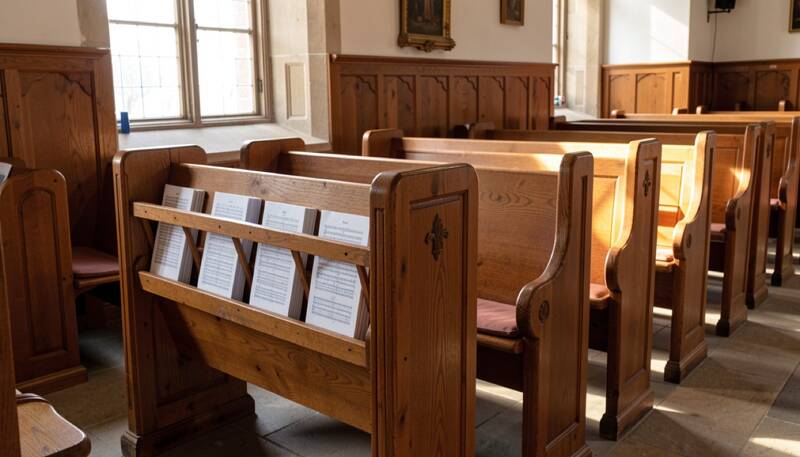
Start with the service. Knowing what a Baptist worship service contains, and why, makes everything else legible: the ordinances explain the baptistry and the communion table, the sermon explains the pulpit's centrality, and the announcements explain the week's real social calendar. Move next to programs, since they are the congregation's outward face to neighbors who never attend, and finish with education and discipleship, the internal machinery that forms the people who do the rest. Readers researching a particular congregation's programs rather than the general pattern will find the archival method in the Baptist history section.