What Happens at a Baptist Church
Walk through a Baptist Sunday service from opening hymn to benediction, including communion, baptism Sundays and what visitors can expect.
The visitor's question is practical: what actually happens in there, and what will be expected of me if I walk in? This guide walks through a typical Baptist Sunday service from arrival to benediction, explains the two ordinances a visitor may encounter, and notes the variations between congregations. It is written from the outside, as a factual description rather than an invitation, and it draws on the patterns common to the tradition, including the congregations of the American Baptist family described in the journal's guide to Baptist beliefs.
Arriving and settling in
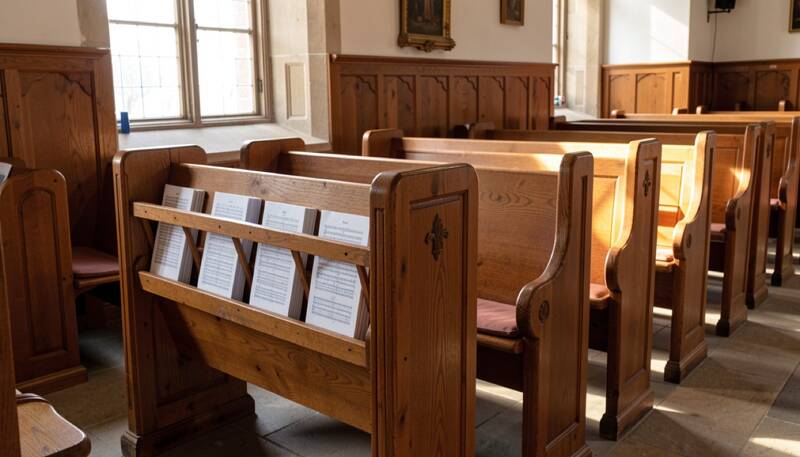
Services are usually listed with two times, Sunday school and worship, and a visitor aiming for the service alone comes for the later one. Greeters hold doors, someone hands out a printed order of service or announces that everything will appear on screens, and ushers help find seats, all of it deliberately ordinary. Dress runs the full range: suits in some older downtown congregations, jeans and flannel in many others, and no congregation polices it as tightly as visitors fear. Pews fill back to front in traditional buildings, a human constant. Hymnals and Bibles wait in the rack, and pages are announced, so nobody needs to have brought anything.
The order of service, movement by movement
A traditional service opens with a prelude as people settle, then a welcome and announcements from the pastor or a lay leader. A call to worship, a sentence of scripture read aloud, gathers the room into the service proper, followed by a hymn. The pastoral prayer comes early in many Baptist services, a several minute prayer naming the congregation's concerns and the world's, sometimes followed by a quieter moment of shared silence. Scripture is read, often by a lay member, and in expository congregations the sermon text is read again from the pulpit. Music follows several patterns: classic hymns with organ or piano, contemporary worship songs with a band, or a mix, with choirs or small ensembles in larger congregations. The sermon, typically twenty five to forty minutes, works through a passage or topic, and Baptist preaching leans explanatory, walking the text verse by verse. After the sermon comes the invitation or closing hymn, the offering is collected by passing plates during a hymn, and the service ends with a benediction, a short spoken blessing, and a postlude. A visitor politely passing the plate along, or letting it pass, surprises nobody.
What the ordinance of baptism looks like
On scheduled Sundays, often one a month or a handful a season, the service includes a baptism. The baptistry, a pool set into the platform usually hidden behind a curtain or lowerable panel, is filled beforehand and warmed. The candidate, in robe or plain clothes over a change of clothing, enters the water with the pastor, who asks a question of faith, typically a confession that Jesus Christ is Lord. The pastor lowers the candidate fully under the water and raises them, the room watches from the pews, the congregation sings, and people often applaud or greet the candidate at the front afterward. Because Baptists baptize upon personal profession of faith, candidates range from young people to grandparents, and each baptism includes a brief word of testimony in many congregations. The theology behind the practice is laid out in Baptist beliefs explained.
What the Lord's Supper looks like
The second ordinance arrives monthly or quarterly depending on the congregation. Deacons, the church's lay officers, distribute bread and small cups to worshippers seated where they are, a style called pew communion; some congregations instead come forward to receive. The pastor reads the accounts of Jesus' last meal with his disciples, offers a prayer, and the room eats and drinks together, often in silence or with quiet music. Baptist congregations generally invite all professing believers to participate, regardless of membership, and a visitor who simply refrains passes unremarked. The service's tone shifts noticeably during the ordinance, quieter and more deliberate, and it usually closes the meeting.
What else fills the church week
Sunday is the visible peak of a fuller schedule. Wednesday evening typically carries a prayer meeting, the congregation's oldest midweek habit, and often youth group. Weekday hours hold the programs described in the journal's survey of church community programs: food distributions, tutoring, English classes, recovery meetings, scout troops. Some congregations stream services and archive sermons online, a habit that long predates recent years among churches with radio ministries. The building that seems quiet on a Tuesday afternoon is usually holding more scheduled life than its parking lot suggests.
How much variation to expect
Two Baptist churches a few miles apart can feel like different worlds, and the differences track the denominational families and local history rather than geography alone. Traditional congregations keep hymnals, organs and formal orders; contemporary ones run bands, screens and informal structure; many mix deliberately. Music volume, service length, from sixty to ninety minutes, and sermon style vary with the congregation's age and family. What stays constant across the tradition is the shape: gathered singing, read scripture, a preached sermon, prayed concerns, and the two ordinances observed as the congregation's shared rituals rather than private ceremonies.
A short checklist for the first visit
Arrive ten minutes early for a seat and a moment to settle. Expect to be greeted and not pressured; a name tag or a visitors' card may be offered, and declining the card is unremarkable. Sit anywhere, sing if you wish, pass the plate along, stay for coffee afterward if there is any, which there usually is. To understand what you watched afterward, read how congregations form their members and, for the history under the steeples of western Colorado, the journal's account of Christianity in Grand Junction.