Christian Education and Discipleship
What discipleship means beyond Sunday attendance: Sunday school history, catechism, mentoring pairs and structured learning paths.
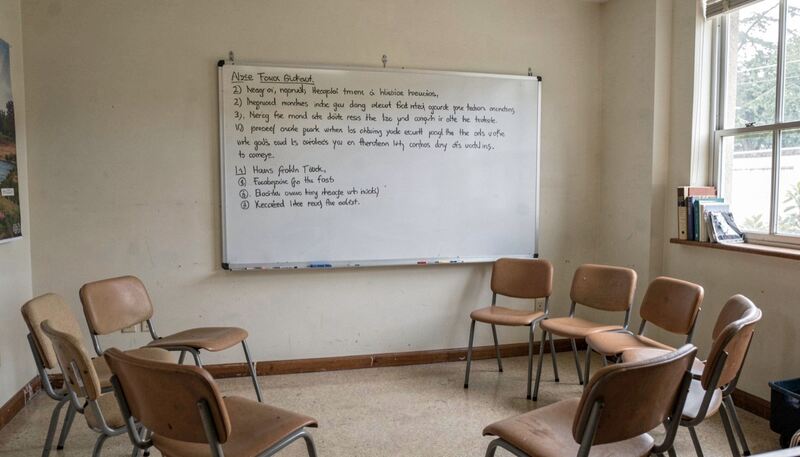
Churches use a pair of old words for what happens after someone starts attending: education and discipleship. Education names the teaching machinery, Sunday schools, classes, curricula, catechisms. Discipleship names the deeper claim, that faith is learned by following rather than merely studying, through mentoring, practice and shared life. The two are braided together in every congregation, and together they form the internal machinery that turns Sunday attendance into formation that can last decades. This guide explains both, their history and the practical structures churches use today, described from the outside.
What discipleship actually means
The word translates a first century arrangement: a disciple attached themselves to a teacher, traveled with them, imitated their practice and carried their message. Applied in congregations, discipleship means formation toward a way of life, not information transfer alone. The distinction shows up in program design. A class teaches what a congregation believes about prayer; a discipleship structure has members pray daily, meet weekly with a partner to discuss it and gradually take responsibility for others. Attendance based religion asks little beyond presence; discipleship language explicitly asks for rearranged habits, which is why congregations that emphasize it organize small groups, mentoring pairs and service rotations rather than lecture series alone. How this differs from ordinary membership is visible in the pipeline most congregations run: attend, join, serve, lead.
Where Sunday school came from
The Sunday school began as literacy work, not church programming. In 1780s Gloucester, England, the printer and reformer Robert Raikes organized classes that taught reading to working children on their one free day, using the Bible as the primer, and the model spread across the Atlantic within a decade. American congregations built the institution into age graded departments, teacher training, standardized curricula and dedicated wings on church buildings, making Sunday school the largest volunteer education system the country has known. Over two centuries its content shifted from reading instruction to religious formation, and its fortunes tracked the culture: strong midcentury, thinned by later scheduling pressures and youth sports, revived in various small group formats. The adult wing of the movement proved durable, since adults kept studying long after the children's hour moved around youth schedules, a shift toward the study formats mapped in the journal's Bible study section.
Catechism and confessional traditions
Baptist and much of Protestant memory carries a suspicion of creeds imposed from above, but the teaching genre of the catechism, question and answer summaries of belief, runs deep in the tradition too, from the Reformation catechisms to Baptist question books used in nineteenth century churches. The pattern is simple and effective: memorized answers to ordered questions, what the tradition believes, what the ordinances mean, how a Christian prays. Modern congregations use the genre loosely, in new member classes that walk through beliefs, ordinances and church governance over several weeks, and in confirmation style courses for adolescents. Where a congregation belongs to a confessional family, as described in the journal's guide to Baptist beliefs, these classes teach the distinctive positions explicitly; where it is independent, they often teach the local congregation's own statement of faith.
Mentoring pairs and one to one formation
The most ancient formation structure is two people: an older believer and a younger one, meeting regularly over scripture and life. Congregations formalize this in mentoring or accountability pairs, Paul and Timothy arrangements as the programs name them, with agreed rhythms, a passage to read, questions to answer honestly, prayer for specific struggles. The format's strength is its honesty at low scale: people say things one to one that they will not say in a living room of twelve. Its weakness is dependence on the right pairing and the maturity of the mentor, which is why durable programs include mentor training, fixed terms and a deliberate ending, rather than pairing people indefinitely and hoping.
Small groups as the modern backbone
Since the late twentieth century the small group has carried most of the discipleship load in growing congregations: weekly or biweekly meetings in homes, a shared curriculum or book, prayer and pastoral care distributed across the groups rather than concentrated in the pastor. The mechanics of running such a group well, meeting structure, question craft, leadership multiplication, are covered in the journal's guide to leading a small group Bible study. What congregations add around the groups is the formation architecture: leader apprenticeship, coach oversight of several groups, and a teaching pipeline that moves members from participant to host to leader, typically over a year or two.
Learning paths and leadership pipelines
Mature congregations sequence the pieces into published paths: a newcomers' class introducing belief and membership, then foundational courses on scripture and practice, then serving rotations matched to gifts, then leadership training for deacon candidacy, teaching roles or ordination. The pipeline exists because congregational self governance, explained in the beliefs guide, requires a bench: churches need members able to teach, chair committees, coordinate volunteers and eventually pastor, and volunteer institutions that fail to train their next generation simply age. The same logic drives the programs side described in the survey of church community programs: a food pantry coordinator is a formed leader, not a hire.
Formation across a lifetime
The final shape of the machinery is generational. Children move through Sunday school and youth group into membership classes; adults move through study, service and leadership; older members carry mentoring roles and institutional memory, and in healthy congregations the oldest members teach the newest. Historians of congregational life, including those tracing a single church across a century, read the education records as the institution's continuity: the Sunday school rolls, class lists and curriculum orders show a congregation reproducing itself long before anniversary booklets said so. For that documentary trail in one western Colorado church, see the history of First Baptist Church, Grand Junction.